Data: Existing Vegetation (EVT)
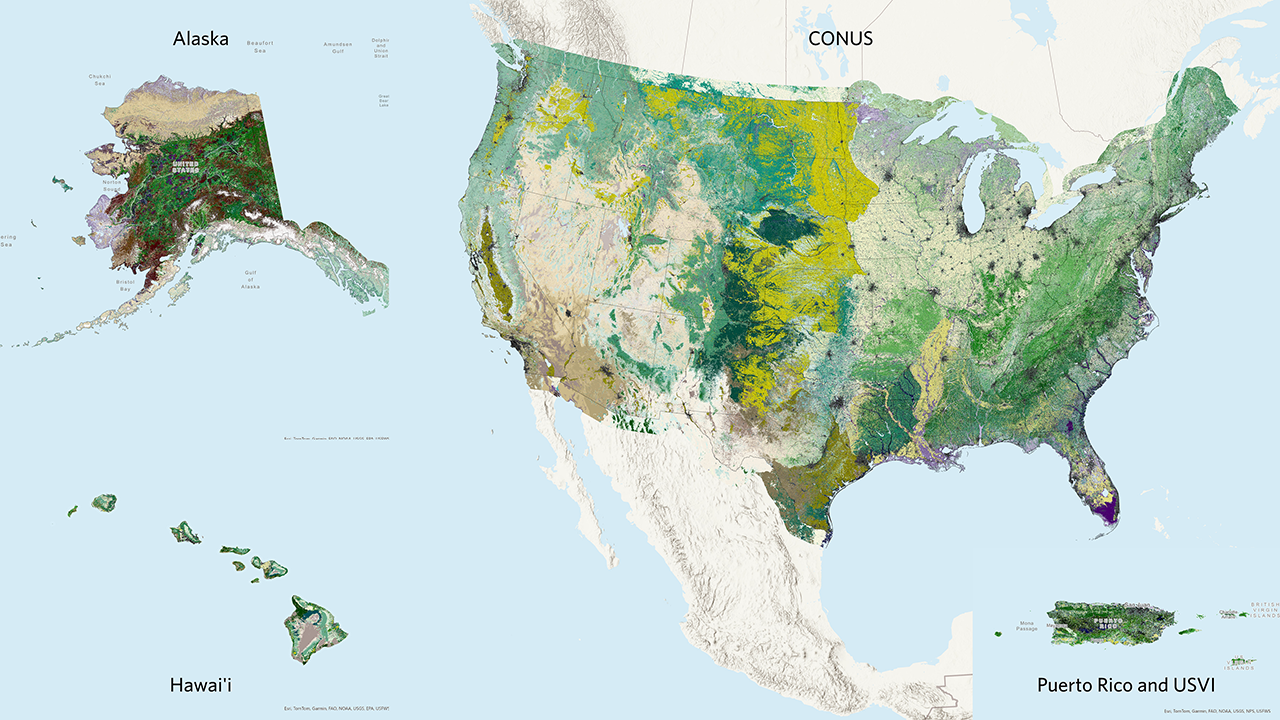
What is Existing Vegetation Type?
The Existing Vegetation Type (EVT) data represent the species composition currently present at a given site. Vegetation map units are primarily derived from NatureServe’s Ecological Systems classification, which is a nationally consistent set of mid-scale ecological units. Additional units are derived from the National Land Cover Database (NLCD), National Vegetation Classification Standard (NVCS) Alliances, and LANDFIRE-specific types.
EVTs are mapped using decision tree models, field data, Landsat imagery, elevation, and biophysical gradient data. Decision tree models are developed separately for each of the three lifeforms—tree, shrub, and herbaceous—and are then used to generate lifeform-specific EVT layers. The EVT layer is essential for understanding the current state of vegetation and planning management actions.
Using EVT in fire needs assessments
EVT is a valuable tool in Fire Needs Assessments for several reasons:
Current Vegetation State: EVT provides a detailed understanding of the current vegetation state, which is essential for planning restoration and management activities.
Invasive Species Management: By identifying areas dominated by invasive species, EVT helps prioritize management actions to remove these species and restore native vegetation.
Fire Management: Understanding the current vegetation composition is crucial for planning prescribed burns and other fire management activities.
Learn more
For more detailed information on Existing Vegetation Type, please visit the following web pages:
These resources provide comprehensive information on Biophysical Settings and their applications in landscape management.
Still have questions? LANDFIRE is here to help.
Ask the LANDFIRE Helpdesk (email link).
Search and subscribe to the LANDFIRE YouTube Channel (see tutorials, Office Hours, quick demonstrations).
Join an Office Hour (monthly meeting with open format Q & A with LANDFIRE experts).
Schedule a meeting (email link) with TNC’s LANDFIRE Team.